Bradley Nowell Early Recording
In the mythology of underground music, there are always whispers—half-remembered songs, mislabeled tapes, stories that hover somewhere between fact and folklore. For decades, fans of Sublime traded in these fragments: tales of lost sessions, hazy demos recorded in cramped rooms thick with smoke and possibility, moments captured before anyone realized they were witnessing the beginning of something enduring. And then, on April 1st, 2025, one of those whispers solidified into something real.
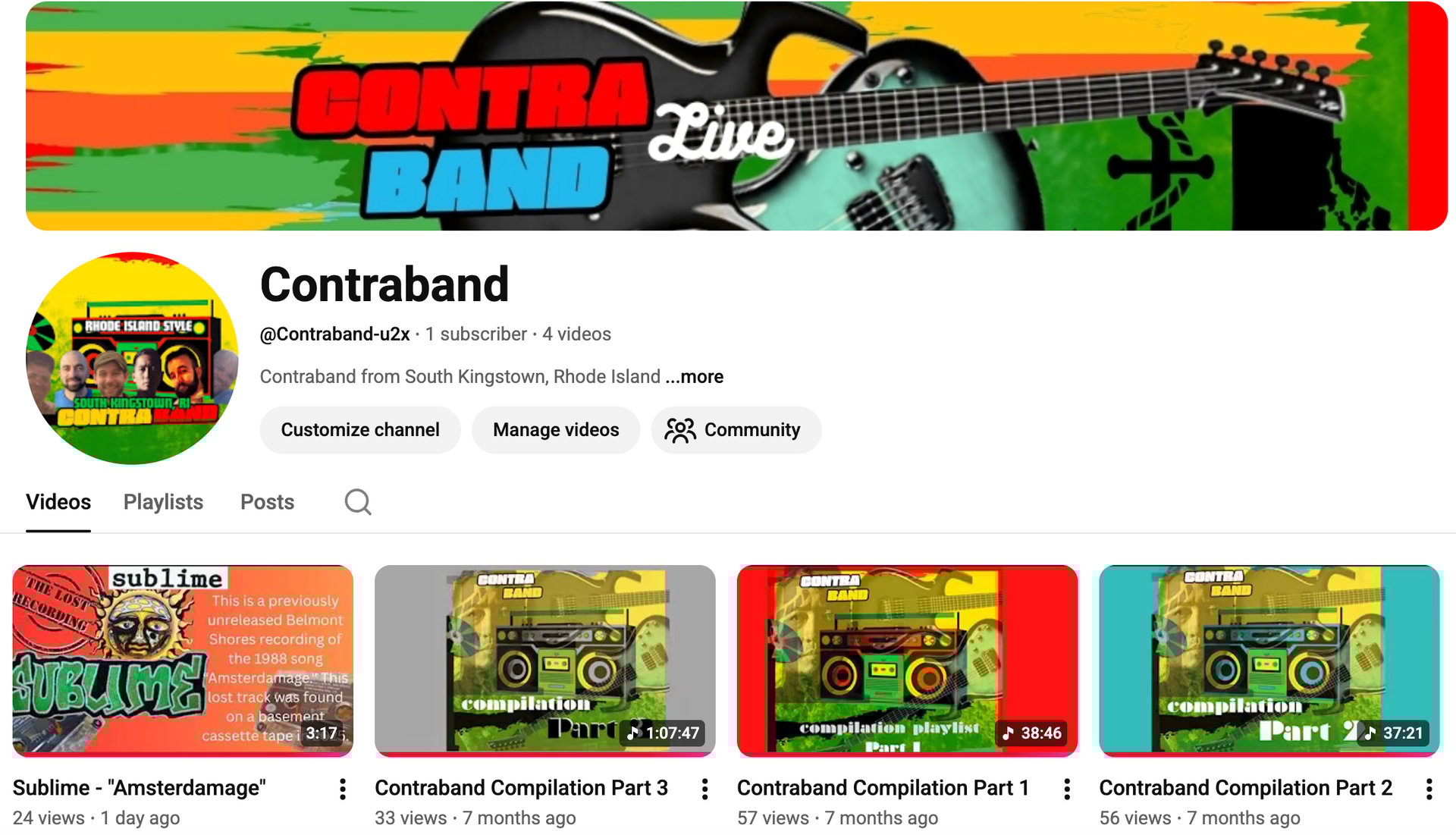
From a dusty box of cassette tapes tucked away in a Belmont Shore home, a track surfaced that few—if any—had ever heard before. Scribbled faintly across the label in aging ink was a single word: “Amsterdamage.” Beneath it, almost as an afterthought: “1988 Demo.” What followed was not just a rediscovery, but a rare portal into the embryonic stage of a band whose sound would later ripple far beyond Southern California.
The tape itself bore all the marks of its age. The plastic casing had yellowed, the label slightly peeling at the edges, as though time itself had tried to erase it. But once played, the recording revealed something startlingly alive. “Amsterdamage” isn’t polished, nor is it structured in the way listeners might expect from later Sublime releases. Instead, it feels immediate—raw in a way that suggests it was never meant for public consumption. This was a moment captured for the sake of creation, not distribution.
The track opens with a loose, almost hesitant guitar riff, wavering between reggae rhythm and punk urgency. There’s a looseness to it, as if the players are still feeling each other out, searching for the groove rather than locking into it. Then the bass enters—slightly distorted, pushing forward with a dub-like heaviness that anchors the otherwise drifting intro. A faint hum of tape hiss lingers in the background, a reminder of the analog medium and the basement environment in which this was recorded.
When the vocals finally come in, they feel less like a performance and more like a stream of consciousness. There’s a playful unpredictability to the phrasing, lines stretching and collapsing in ways that resist conventional structure. Lyrics drift between fragmented storytelling and abstract imagery—references to travel, intoxication, dislocation. The word “Amsterdamage” itself seems to act as both anchor and illusion, suggesting a place, a state of mind, or perhaps just a sound that felt right in the moment.
What makes the track particularly fascinating is how clearly it foreshadows the band’s eventual signature style while simultaneously existing outside of it. You can hear the early DNA: the blending of genres, the disregard for rigid boundaries, the instinct to fuse punk aggression with reggae rhythm and hip-hop sensibility. But here, it’s unrefined. The transitions are abrupt, the timing occasionally slips, and yet that imperfection is precisely what gives the recording its power.
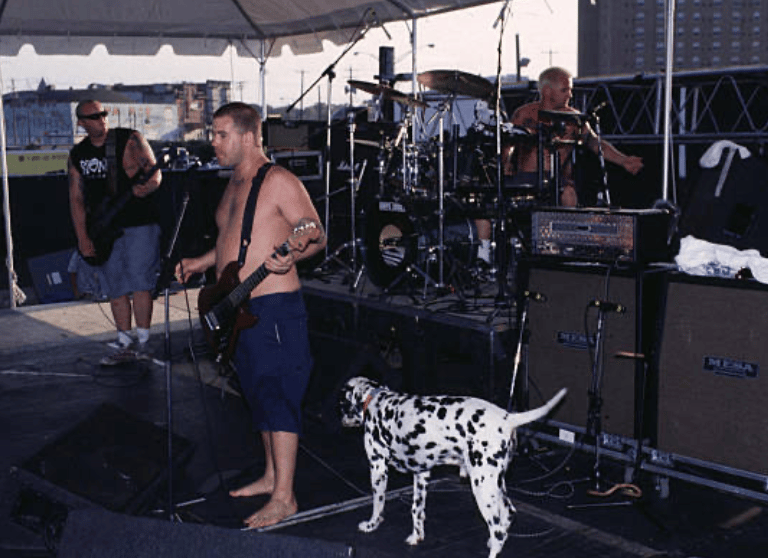
The Sublime Lost Track/Recording
There are moments where the song seems to nearly fall apart—where the instruments drift out of sync or the vocals lag behind the beat—but then, almost miraculously, it pulls itself back together. These fluctuations create a kind of tension that’s absent from more polished recordings. It’s the sound of a band experimenting in real time, discovering what works by pushing past what doesn’t.
The basement setting plays a crucial role in shaping the track’s character. You can almost hear the room: the low ceiling, the muffled acoustics, the subtle echo bouncing off unfinished walls. There’s a closeness to the recording that feels intimate, as though the listener is sitting just a few feet away from the band. Occasional background noises—an offhand laugh, the faint clatter of something being knocked over—add to the sense that this wasn’t a formal session, but rather a spontaneous burst of creativity.
“Amsterdamage” also offers a glimpse into the cultural environment of Belmont Shore in the late 1980s. This was a time and place where musical influences collided freely—punk shows, reggae records, hip-hop tapes circulating through tight-knit communities of musicians and friends. The track reflects that cross-pollination. It doesn’t commit to a single style because it doesn’t need to. Instead, it moves fluidly between them, embodying a kind of sonic openness that would later become a defining characteristic of the band.
Lyrically, the song resists easy interpretation. There are references that seem personal, perhaps even inside jokes, layered alongside broader themes of escapism and restlessness. The mention of Amsterdam—if it is indeed a literal reference—could evoke ideas of travel and freedom, but it also feels symbolic, representing a kind of mental departure from the constraints of everyday life. The suffix “-age” adds another layer, turning the word into something abstract, almost dreamlike.
What’s particularly striking is how the track captures a sense of youthful urgency. There’s an energy that feels both reckless and purposeful, as though the band is driven by an unarticulated need to create, to experiment, to push boundaries without fully understanding where those boundaries lie. It’s this energy that would later resonate so strongly with listeners, but here it exists in its purest form—unfiltered, unmediated.
The discovery of “Amsterdamage” also raises intriguing questions about what else might still be out there. If a track like this could remain hidden for nearly four decades, tucked away in a forgotten box, how many other recordings might be waiting to be uncovered? Basement demos, rehearsal tapes, half-finished songs—each one a potential piece of the larger puzzle, offering new insights into the band’s evolution.
For longtime fans, the track is more than just a curiosity; it’s a connection to a moment that predates everything they thought they knew. It challenges the idea of a fixed origin, suggesting instead that the band’s sound was always in flux, shaped by countless experiments and iterations that may never have been documented. “Amsterdamage” is one of those rare documents—a snapshot of a process rather than a product.
For newer listeners, the track serves as an entry point into a different kind of listening experience. It invites them to step away from polished recordings and immerse themselves in something more immediate, more vulnerable. It’s not about perfection; it’s about presence. About capturing a moment as it unfolds, with all its imperfections intact.
The preservation and release of recordings like “Amsterdamage” also highlight the importance of archival work in music history. Cassette tapes, in particular, are notoriously fragile. Magnetic tape degrades over time, and without proper storage, recordings can be lost forever. The fact that this track survived at all is remarkable. The fact that it was rediscovered and shared is even more so.
There’s a certain poetry in the way it resurfaced—hidden in plain sight, waiting for the right moment to be heard. April 1st, a date often associated with pranks and illusions, becomes instead a day of revelation. Not a trick, but a gift: a piece of history returned to the present.
Listening to “Amsterdamage” now, in a digital age defined by precision and immediacy, feels almost subversive. It resists the clean lines and perfect clarity of modern production, offering instead something textured and unpredictable. It reminds us that music doesn’t have to be flawless to be meaningful—that sometimes, the most compelling recordings are the ones that capture the messy, beautiful reality of creation.
In the end, “Amsterdamage” isn’t just a song. It’s a time capsule. A fragment of a larger story that continues to unfold with each new discovery. It invites us to listen not just with our ears, but with our imagination—to fill in the gaps, to wonder about the moments that led to its creation, and the countless others that remain hidden.
And perhaps that’s its greatest gift. Not just the sound itself, but the sense of possibility it carries. The idea that somewhere, in another box, in another basement, there are more stories waiting to be told.